89 views
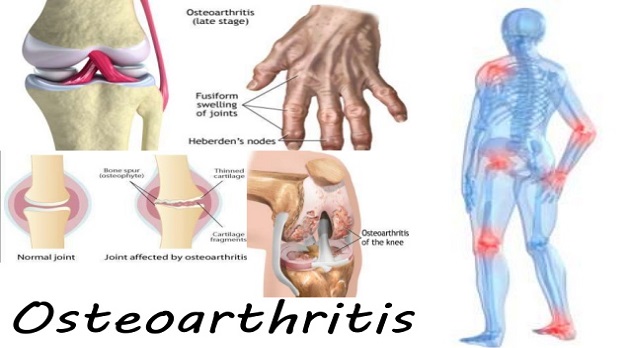
DEFINITION Osteoarthritis is a joint condition in which degeneration and loss of articular cartilage occur, leading to pain and deformity. Two forms are usually recognized: primary (idiopathic) and secondary. The primary form may be localized or generalized. PHYSICAL FINDINGS AND CLINICAL PRESENTATION ● Similar symptoms in most forms: stiffness, pain, and crepitus ● Joint tenderness, swelling ● Decreased range of motion, joint contractures ● Crepitus with motion ● Bony hypertrophy ● Pain with range of motion ● Distal interphalangeal (DIP) joint involvement possibly leading to development of nodular swellings called Heberden's nodes ● Proximal interphalangeal (PIP) joint involvement possibly leading to development of nodular swellings called Bouchard's nodes ● Figures 290–3 and 290–4 illustrate common abnormalities of the hands and feet. CAUSE Primary osteoarthritis is of unknown cause. Secondary osteoarthritis may result from a number of disorders including trauma, metabolic conditions, and other forms of arthritis. DIFFERENTIAL DIAGNOSIS ● Bursitis, tendinitis ● Radicular spine pain ● Infl ammatory arthritides ● Infectious arthritis IMAGING STUDIES ● When the knee is involved with pain, x-rays should always be taken with the patient standing ● X-ray evaluation reveals: ● Joint space narrowing ● Subchondral sclerosis ● New bone formation in the form of osteophytes TREATMENT ● Rest, restricted use or weight bearing, and moist heat ● Walking aids such as a cane (often helpful for weightbearing joints) ● Suitable footwear ● Gentle range of motion and strengthening exercise ● Local creams and liniments to provide a counterirritant effect ● Education, reassurance ● Mild analgesics for joint pain ● NSAIDs if infl ammation is present ● Occasional local corticosteroid injections ● Viscosupplementation (injection of hyaluronic acid products into the degenerative joint) is of uncertain benefit. ● Nutritional supplements (glucosamine and chondroitin) are unproved. Posted in General Surgery


.svg.png)
 AM
AM EN
EN RU
RU